Best Food Halls in Tampa: A Local's Guide
A local's field guide to Tampa's food hall boom: what the good ones get right, where the concept has taken root, and how to actually eat well once you're inside.
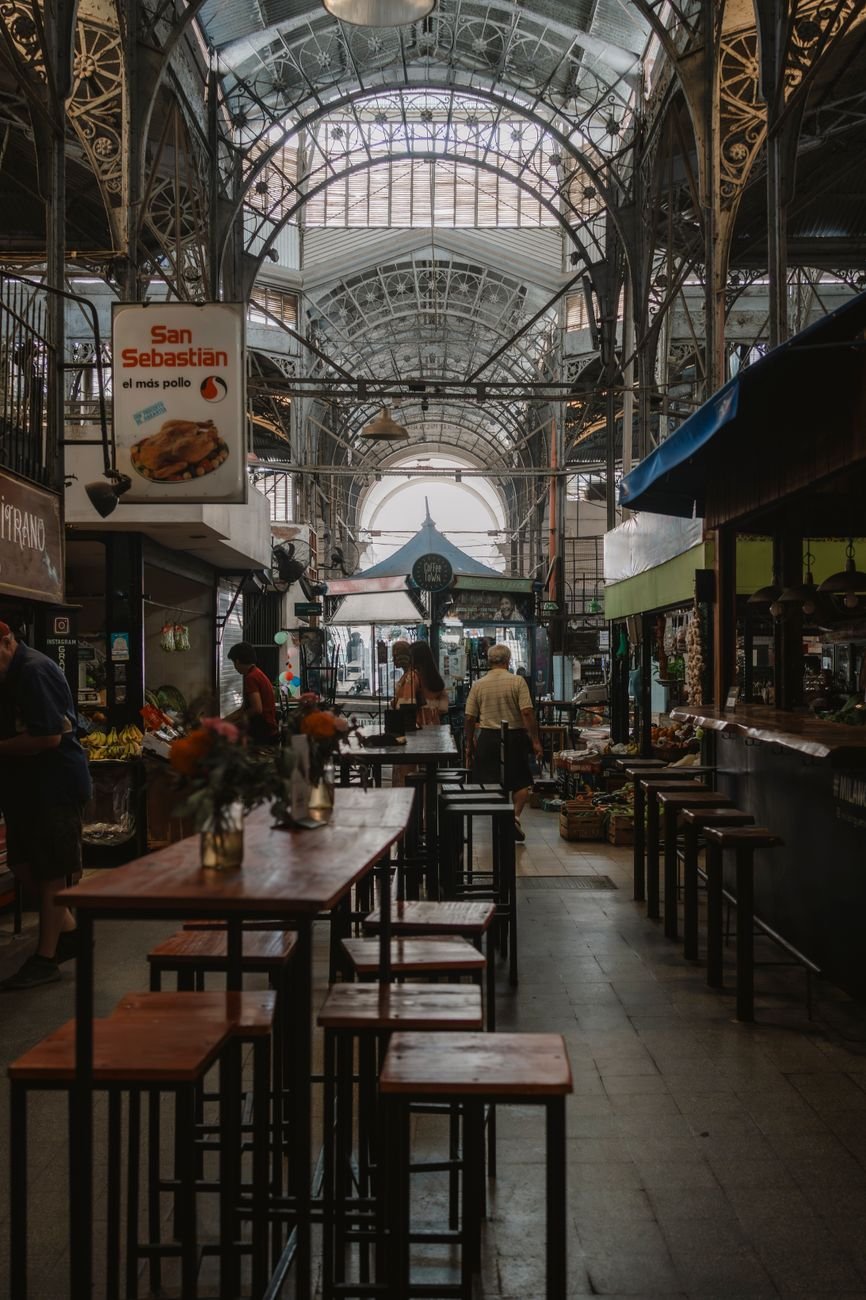
Walk into any of the city's big communal-dining spaces on a Sunday around one o'clock and you'll see the same choreography: a family staking out the long table nearest the door with a stroller wedged against the bench, a guy with a laptop and a cortadito camped in the corner like he pays rent there, a line three vendors deep for whatever's got the best smoke coming off it. This is the real test for the best food halls in Tampa right now. Not the design, not the string lights. Whether people actually treat the place like a second living room.
Tampa didn't invent the food hall, but the format fits the city's temperament better than it fits most. This is a place that likes its dining loud, communal and a little unpolished around the edges, and a good hall delivers exactly that without pretending to be a restaurant with a tasting menu. The bad ones feel like a mall food court with better lighting. The good ones feel like a neighborhood bar that happens to serve six different cuisines at once.
What Separates the Best Food Halls in Tampa From a Glorified Food Court
Vendor variety matters less than most guides suggest. A hall with eight stalls all doing some version of tacos and poke isn't diverse, it's redundant. What actually distinguishes a strong hall is contrast: a raw bar next to a noodle counter next to someone slow-smoking meat, so that four people at one table can order four completely different meals and still eat together. Look for that spread before you look at square footage.
Bar program is the second tell. Tampa's craft beer culture is one of the best in the South, and a hall that treats its taps as an afterthought is telling you something about how seriously it takes the rest of the operation. The strongest halls rotate local breweries alongside the big regional names, pour wine that isn't an afterthought, and staff a bar that can make an actual cocktail rather than just crack cans.
Seating flexibility rounds it out. The best layouts mix long communal tables for groups, two-tops for dates, and a few stools right at a vendor counter for people eating solo. A hall that only offers cafeteria-style bench seating loses half its use cases.
Where the Concept Has Taken Root
Riverside Heights and the Tampa Heights corridor along the river gave the city its flagship example in a converted industrial building, the kind of adaptive reuse project that turned a stretch of the Tampa Riverwalk into a genuine destination rather than just a jogging path. That success pulled the format into other pockets of the city. Seminole Heights, already the neighborhood where Tampa's craft beer identity got its start, has the bungalow-and-brewery texture that makes a smaller-scale hall feel like a natural extension of the existing bar crawl. The Channel District, still filling in around Water Street, leans toward halls built for the after-work crowd pouring out of the condo towers and office buildings nearby. Ybor City is a different animal entirely. Its Latin heritage runs through the cigar factories and social clubs that still define those blocks, and any hall that opens there should be read against that history rather than treated as a blank slate for whatever concept is trending.
What to Seek Out Once You're Inside
- A vendor doing something specific to Florida or the Gulf rather than a generic national chain in miniature, whether that's stone crab in season or a proper grouper sandwich
- At least one stall leaning into Tampa's Cuban heritage, since the classic Cuban built on salami rather than ham is a point of civic pride here, not a footnote
- A dessert or coffee counter someone clearly put thought into, not a soft-serve machine parked in the corner as an afterthought
Timing changes the experience more than people expect. Weekday lunch tends to move fast and skew toward the office crowd grabbing something quick between meetings. Weekend afternoons are the family scene, strollers and all. Late evening is when the bar side takes over and the vendor lines thin out, which is honestly the best window for actually talking to the people running the stalls instead of just pointing at a menu board.
Navigating a Hall Without Wasting a Meal
The mistake most visitors make is treating a food hall like a buffet and grazing indecisively across six counters. Better approach: walk the whole floor once before ordering anything. Read every menu, notice which stall has a line of regulars rather than tourists, then commit. Splitting one big order across a group works better than everyone ordering their own full meal, since it lets a table actually sample the range that made the hall worth visiting in the first place.
It's also worth remembering these spaces sit inside neighborhoods with their own personalities, not in some generic downtown-adjacent zone. A hall near Hyde Park's bayfront streets draws a different crowd and a different pace than one a few miles north in Seminole Heights, and the food inside tends to reflect that.
The honest measure of a good Tampa food hall isn't the Instagram wall or the neon sign out front. It's whether you'd actually bring your out-of-town cousin there on a Tuesday, sit for two hours, and not feel like you were killing time in an airport terminal with better beer. Judge it by that standard and the good ones separate themselves fast.